

Your accounts may add up perfectly and still leave important questions unanswered. Has every sale been recorded? Are expenses treated correctly? Does the profit shown on paper reflect the money available to pay suppliers, staff and tax?
A chartered accountant looks beyond the totals to understand the evidence, decisions and obligations behind them. Depending on the work agreed, that can mean identifying gaps in records, questioning unusual transactions and helping you understand what your figures mean for the business. Here are some of the checks that make that professional review valuable.
Are the records complete and supported?
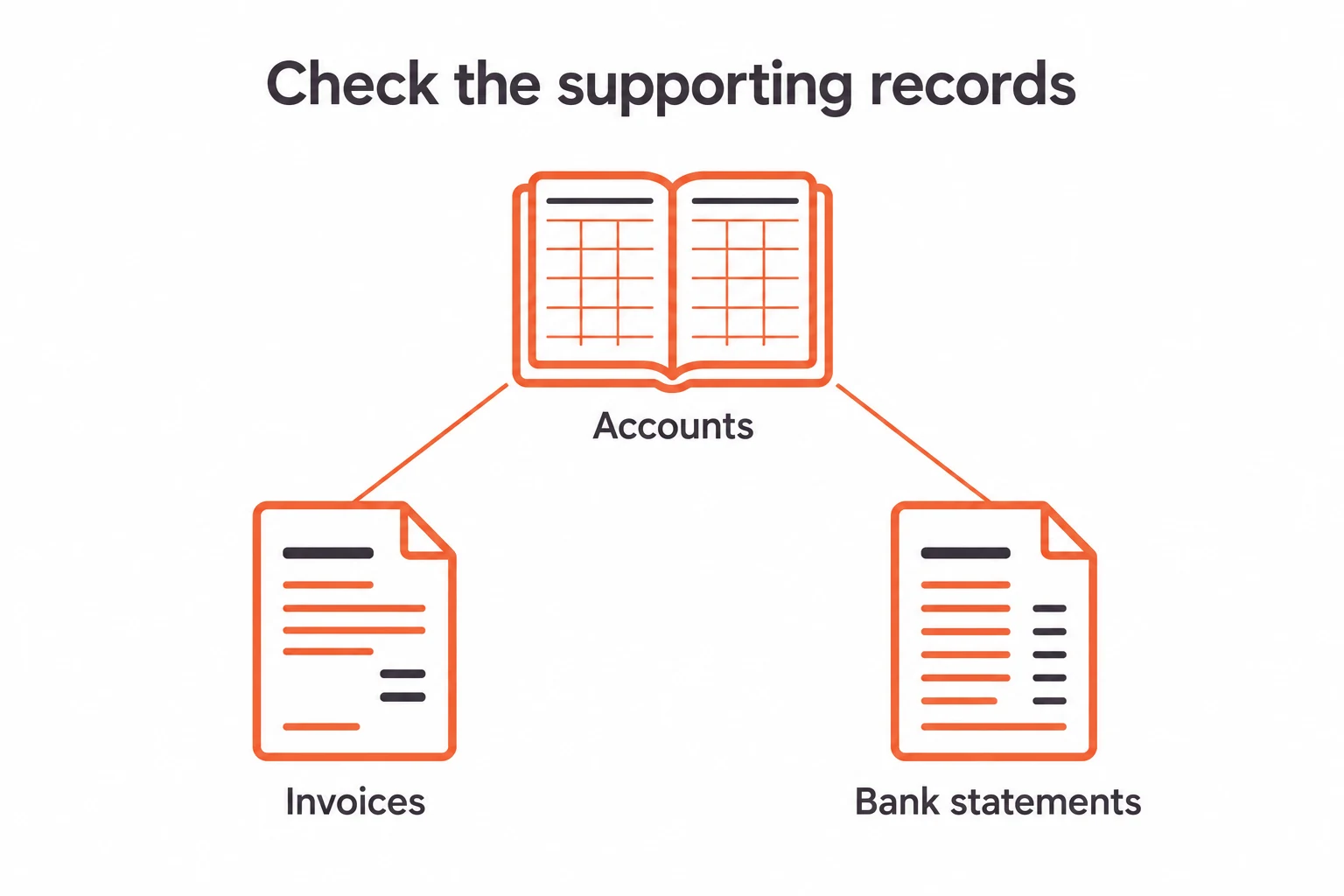
A bank balance is a useful starting point, but it cannot explain everything that has happened in a business. Sales may be unpaid, supplier invoices may be outstanding and payment providers may deduct fees before transferring money into your account.
An accountant will usually reconcile key balances, comparing the bookkeeping with supporting records and investigating differences. That might uncover a duplicated invoice, an omitted bank account or a payment recorded against the wrong customer.
Useful checks can include:
- Matching bank, loan and credit card balances to statements.
- Checking customer and supplier balances for missing or duplicated entries.
- Reviewing invoices, receipts and explanations for unusual payments.
- Looking at suspense accounts where transactions await clarification.
For example, recording only the amount received from a payment provider can understate both sales and fees. The final profit might look right, while turnover and potentially VAT records need attention. Supporting evidence helps establish what actually happened.
Do transactions belong in the right category and period?
Not every payment is an expense, and not every receipt is income. Loan repayments, asset purchases and money introduced by an owner need different treatment. Getting the category right helps your accounts describe the business accurately.
Timing matters too. Depending on the accounting basis used, an annual insurance payment may need spreading across the period it covers. Work completed before the year end may need recognising even if the invoice is raised later.
An accountant considers the relevant accounting basis, the nature of the transaction and any supporting agreements. They may also review stock, unfinished work, customer debts and the useful lives of business assets.
Suppose a business buys equipment and records the entire payment as an ordinary running cost. A review may establish that it should instead be recorded as an asset. Its accounting treatment and the tax relief available are separate questions, so both need consideration.
Are tax returns and statutory submissions consistent?
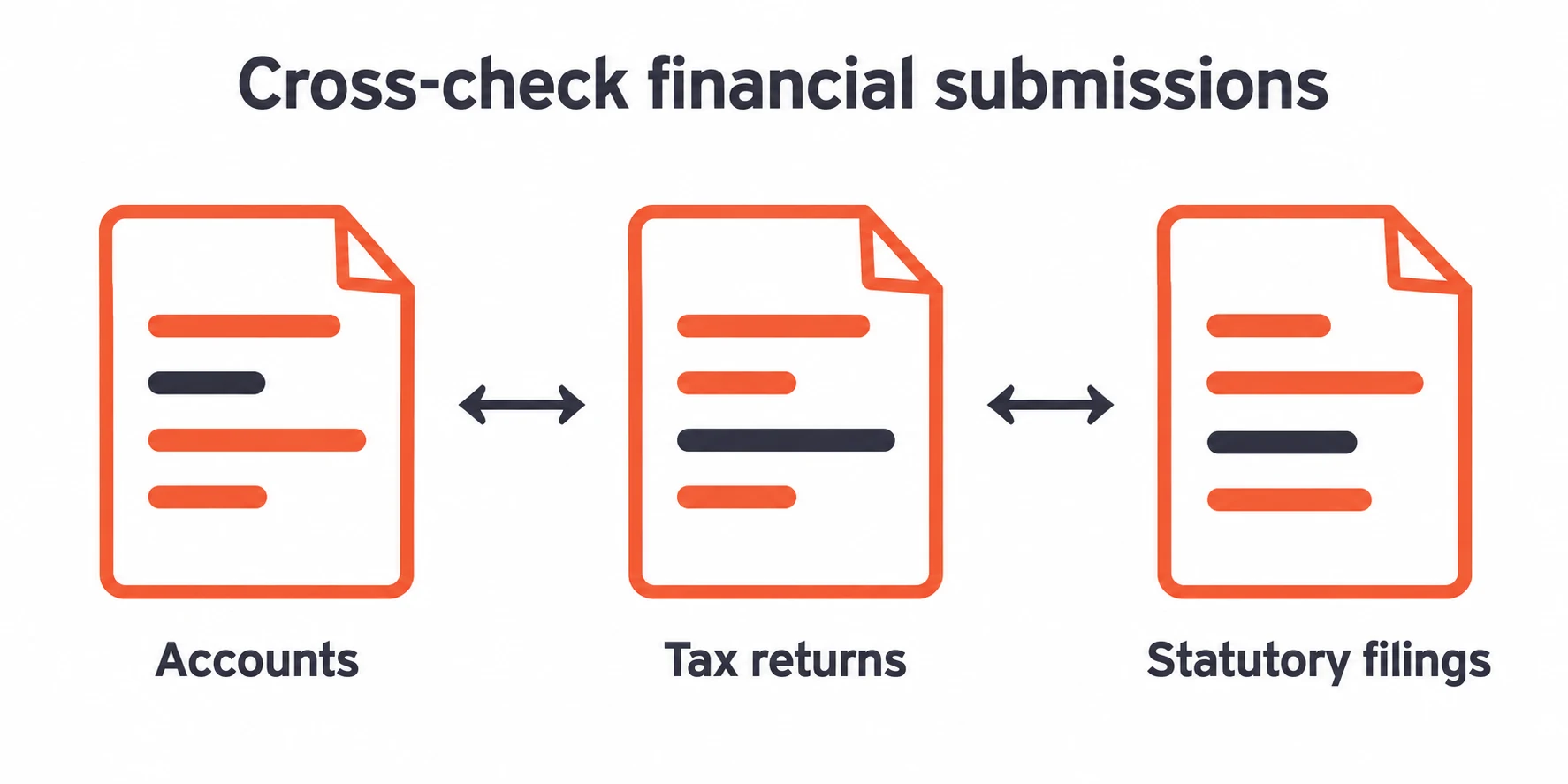
Accounts, tax returns and other submissions serve different purposes, but their figures should be explainable alongside one another. An accountant checks the connections rather than assuming that a total copied from bookkeeping is ready to submit.
Taxable profit, for example, can differ from accounting profit. Some expenses need adding back, while certain purchases may qualify for tax relief under separate rules. The right treatment depends on the circumstances, not simply the description entered in the software.
Where relevant, checks may cover VAT treatment, payroll reporting, tax adjustments and the information required for company filings. They also include identifying applicable deadlines and confirming which responsibilities sit with the accountant and which remain with you.
These are central parts of accounts preparation and tax compliance. Clear records and timely explanations help ensure submissions reflect the business properly, with unresolved questions addressed before filing rather than carried forward.
Is money moving correctly between the business and its owners?
Money taken from a business needs careful classification, particularly where a limited company is involved. Salary, dividends, reimbursed expenses and director loans are not interchangeable, even when the bank transfer looks the same.
An accountant may review director loan accounts, payroll entries and dividend paperwork to understand how withdrawals have been treated. For dividends, the company needs sufficient distributable profits and appropriate records. A healthy bank balance alone does not establish that a dividend is available.
Personal spending paid by the business also needs identifying. Depending on the circumstances, it could affect expense claims, payroll benefits or the balance owed by an owner to the company.
For a sole trader, drawings are not a business expense and do not reduce taxable profit. Keeping personal and business transactions clearly separated makes the position easier to understand. It also gives owners a better foundation for discussing withdrawals and future tax commitments.
Does reported profit translate into usable cash?
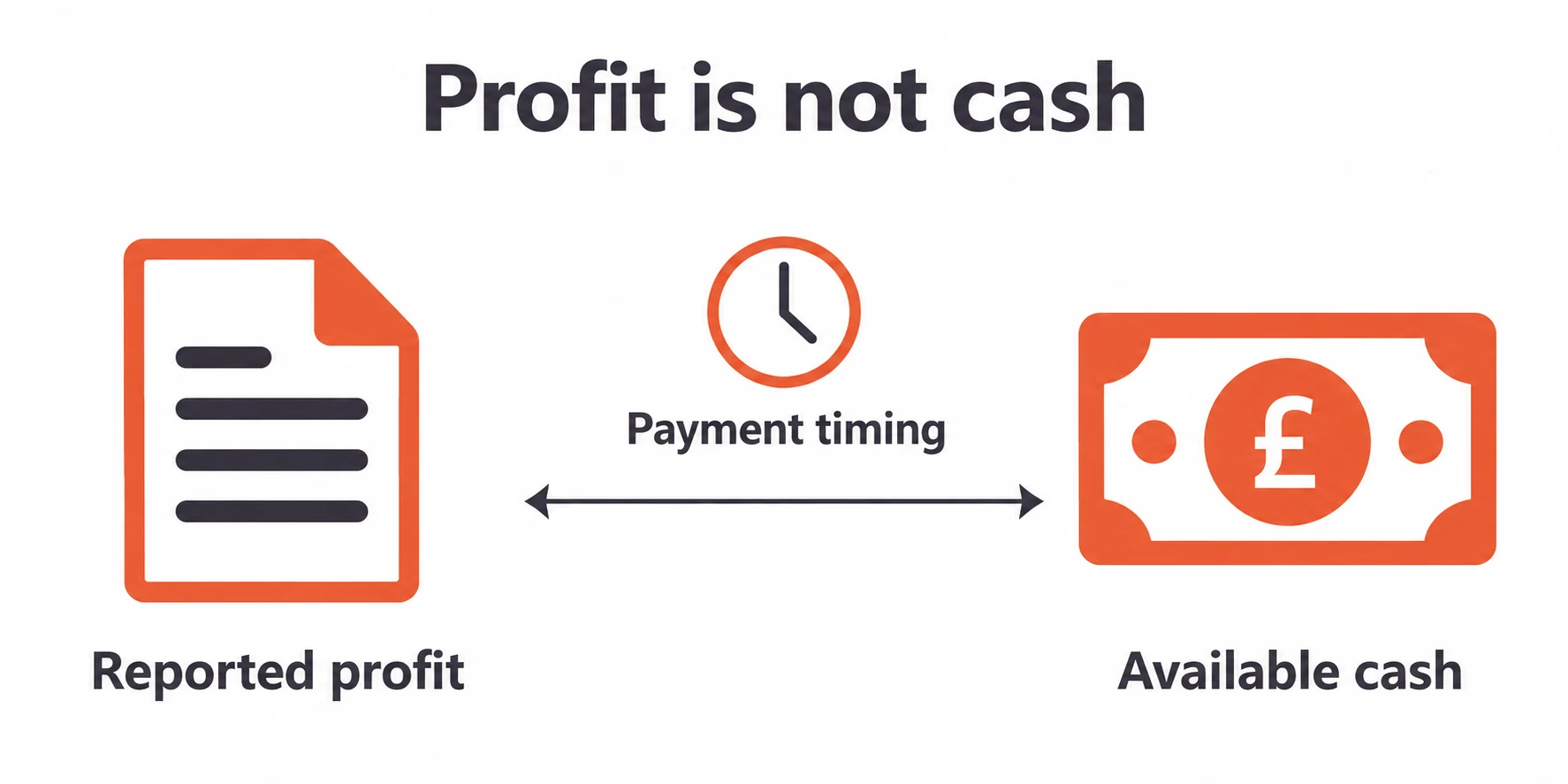
A profitable business can still face a cash shortage. Customers may take longer to pay, stock may absorb funds, or loan repayments and tax bills may fall due before the next substantial receipt arrives.
Looking beyond the profit figure means asking where money is tied up and which commitments are approaching. A review might highlight growing overdue debts, increasing stock balances or reliance on a small number of customers.
Comparing periods can also reveal changes worth investigating. If turnover rises but gross profit falls, possible explanations include higher purchase costs, discounting, a different sales mix or incomplete records. The figures identify the question; understanding the business helps answer it.
Where more detailed planning would help, cash flow planning and business advice can build on reliable accounts. Forecasting expected receipts and payments helps you judge whether recruitment, investment or additional borrowing fits the cash the business is likely to have available.
What do the records reveal about everyday processes?
Repeated accounting adjustments can point to an everyday process that needs strengthening. Missing receipts might suggest an unclear expense procedure. Frequent credit notes could indicate invoicing problems. Unexplained differences may show that bank reconciliations need more regular attention.
An accountant can highlight these patterns and discuss proportionate improvements. For a smaller business, that might mean a monthly review of unpaid invoices, clearer purchase approvals or a consistent way to capture receipts.
You can make the conversation more useful by providing context alongside the figures:
- Explain significant changes in trading or spending.
- Share new loan, lease and finance agreements.
- Flag disputes, doubtful debts and unusual transactions.
- Describe any major plans that could affect cash requirements.
The aim is not extra paperwork for its own sake. It is a dependable routine that gives you clearer information throughout the year and helps your accountant ask better questions when reviewing the accounts.
- Reliable accounts depend on complete records and supporting evidence, not just matching totals.
- Accounting profit, taxable profit and available cash can be different.
- Owner withdrawals need the correct treatment for the business structure.
- Professional review can highlight useful improvements to everyday financial processes.
Frequently asked questions
Does preparing accounts include an audit?
No. Accounts preparation and an audit are different engagements. An audit involves defined procedures and an independent opinion. Preparing accounts does not provide audit assurance or guarantee that every error or fraud will be detected. Your engagement letter should explain the work included.
What should I give my accountant besides bookkeeping records?
Provide relevant statements, invoices, finance agreements, payroll information and details of unusual transactions. Explain changes in trading, significant commitments and any concerns about unpaid debts. Your accountant can confirm which documents are needed for the work agreed.
Can accounting software replace these checks?
Software can organise records, automate entries and flag discrepancies, but it relies on accurate information and suitable settings. It cannot always determine the commercial purpose of a payment or the correct accounting and tax treatment. Professional judgement remains important.
Should I wait until the year end to raise a concern?
It is usually helpful to raise questions when they arise, especially before significant purchases, borrowing or owner withdrawals. Earlier discussion gives you time to gather evidence, understand the implications and make an informed decision.
Understand the story behind your figures
If something in your records needs explaining, speak to Walling Accountants. We can discuss your questions and the support that would help you move forward with clarity.