

A busy order book can feel reassuring, yet still leave you wondering whether you can afford another employee or a new piece of equipment. When the bank balance and your workload tell different stories, making decisions can feel harder than it should.
Your accounts can help bring those stories together. With clear explanations, current information and a practical conversation about your priorities, the figures become more than a record of what has happened. They give you a firmer basis for deciding what to do next, and what can wait.
Start with the decision, not the spreadsheet
You do not need to understand every accounting term before having a useful conversation about your business. Start with the question that is occupying your attention. Perhaps you want to recruit, increase your drawings or stop taking on work that keeps everyone busy without leaving enough profit.
Each question needs different information. A recruitment decision involves the full employment cost, the timing of payments and the work that an extra person could support. A pricing decision needs a closer look at delivery costs, overheads and the margin left on each sale.
Before reviewing the figures, write down:
- The decision you need to make and when you need to make it.
- The outcome you want, such as more capacity or a stronger cash reserve.
- The commitments you would take on and how easily you could change course.
This gives the discussion a clear purpose. Walling Accountants’ advisory services can help you understand your financial position and use that understanding to consider your next steps. The aim is not more reports for their own sake, but information you can act on.
Separate profit from cash you can use
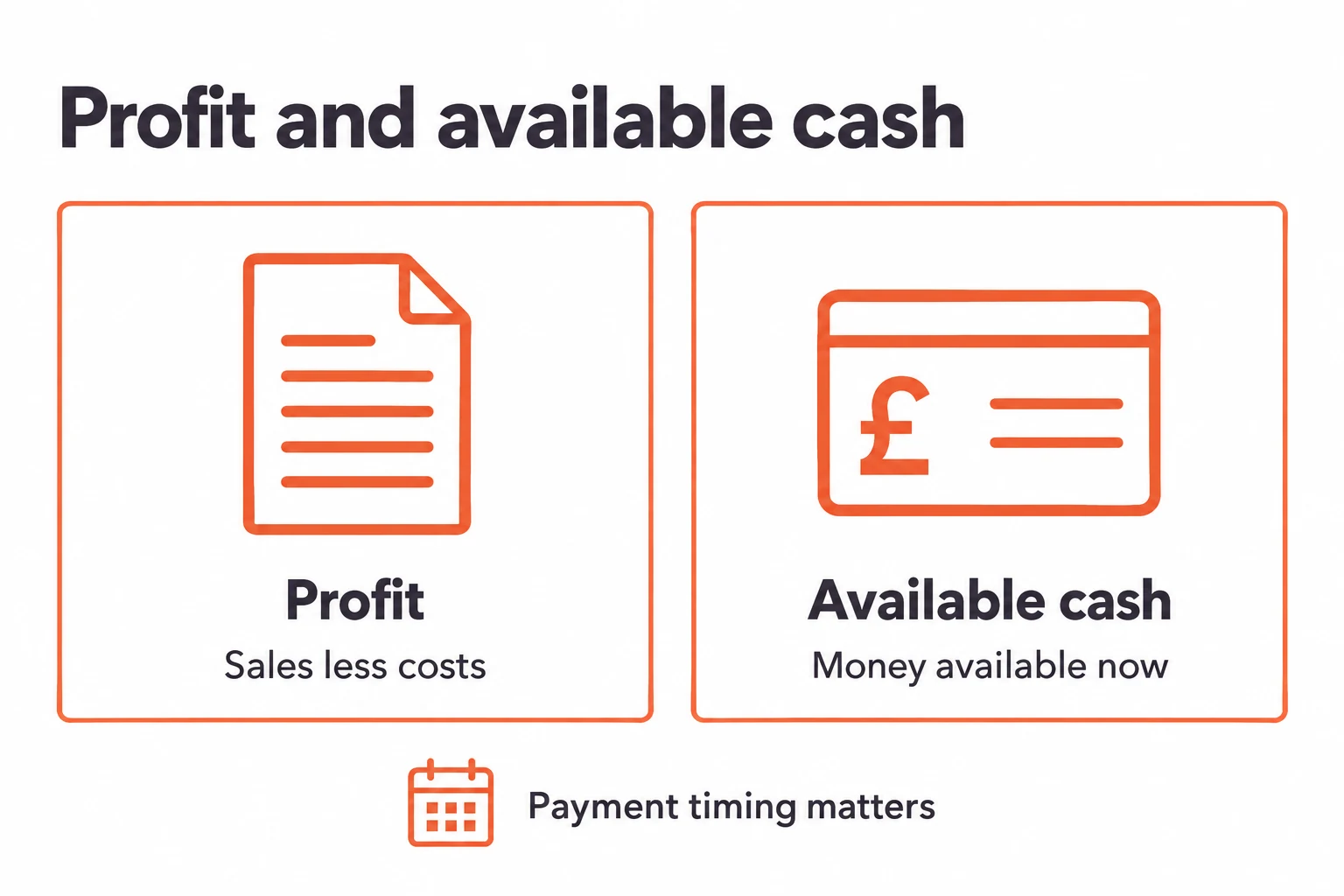
Profit and cash answer different questions. Profit shows whether income exceeds the costs recognised for a period. Cash shows the money available to meet payments as they fall due. A business can be profitable and still face pressure because customers have not yet paid.
Other movements also explain why profit does not match your bank balance. Buying equipment uses cash, while its cost may be recognised in the accounts over time through depreciation. Loan repayments reduce cash, but the repayment of the principal is not a trading expense.
For everyday decisions, look beyond the balance shown in your banking app. Consider:
- Customer invoices that are overdue or unlikely to arrive when expected.
- Supplier bills, wages and other commitments approaching their payment dates.
- Money that needs to be reserved for tax and any applicable VAT liabilities.
This helps you distinguish cash that happens to be in the account from cash that is genuinely available. Before agreeing to a significant purchase, ask what the balance is likely to look like after existing commitments have been paid, not just what it looks like today.
Keep a small set of useful figures in view
A useful financial review does not need dozens of measures. Choose a small set that helps explain how your business is performing and what needs attention. The right selection will depend on how you earn income and where uncertainty tends to arise.
For many owners, a starting point is:
- Sales and gross profit: whether activity is growing and what remains after the direct costs of delivering it.
- Overheads and operating profit: whether the wider cost of running the business is being covered.
- Outstanding customer invoices: how much money is waiting to be collected and how overdue it is.
- Expected cash balances: whether upcoming receipts will cover planned payments.
Compare these figures with your plan and previous periods. Allow for seasonal patterns and unusual transactions before drawing conclusions. Higher sales, for example, may offer little improvement if delivery costs have risen faster.
Reliable records underpin this work. Keeping your records and filings in order through accounting and tax compliance support provides an important foundation. For decisions between reporting dates, make sure the figures you discuss are sufficiently current and include known bills and commitments.
Test your options before making a commitment
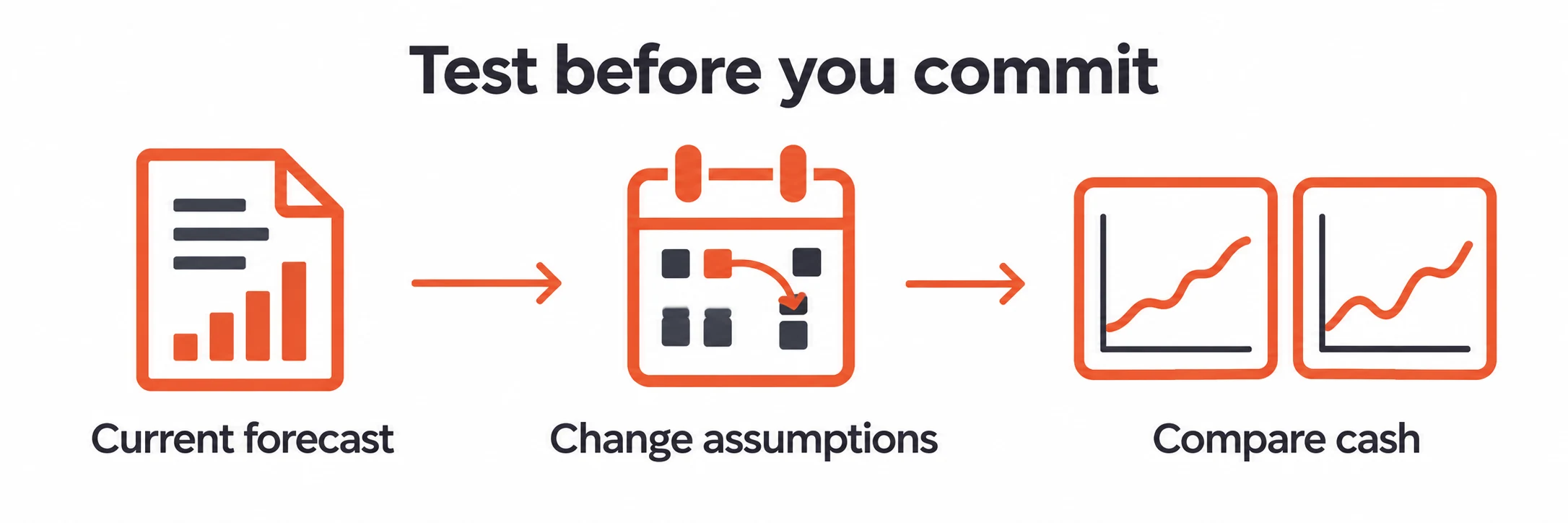
A forecast is not a promise about the future. It is a way to explore what could happen if particular assumptions prove right or wrong. Its value lies in showing where a decision looks manageable and where it could put pressure on the business.
Start with a realistic expectation of sales, costs and payment dates. Then test a less favourable version. What if a major customer pays later, demand softens or a supplier increases its charges? Keep the assumptions visible so you can revisit them as circumstances change.
When considering equipment, compare the initial payment, ongoing commitments, maintenance responsibilities and cash left afterwards. The question is not simply which option has the smallest monthly payment. Our guide to buying or leasing business assets explores considerations worth discussing before you commit.
Agree a practical boundary for the decision. You might proceed only if the forecast retains enough cash to cover essential commitments, or wait until customer payments arrive. A clear condition replaces a vague feeling of uncertainty with something you can check.
Turn each review into a manageable next step
Financial information is most helpful when it leads to action. End each review by identifying what has changed, what matters now and who will do what next. Avoid leaving with a long list of improvements that nobody has time to tackle.
If cash is tighter than expected, the immediate action might be to resolve disputed invoices or speak to customers about payment dates. If margins are falling, it might be to review the costing of one service before changing prices across the business.
Choose a review rhythm that suits your circumstances. A monthly discussion can provide continuity, while a business facing rapid change or cash pressure may need more frequent checks. Keep a short record of decisions and the assumptions behind them.
At the next review, compare what happened with what you expected. Differences are useful evidence, not a reason to abandon planning. Over time, this habit can make forecasts more realistic and decisions less reactive. You still have to exercise judgement, but you do so with a clearer understanding of your options.
- Start financial discussions with a specific business decision.
- Check available cash as well as profit before committing to spending.
- Focus on a few relevant figures supported by current records.
- Test assumptions and agree clear conditions for proceeding.
- Finish each review with an action, an owner and a review date.
Frequently asked questions
Do I need to wait until my annual accounts are ready?
No. Current bookkeeping records and management information can support decisions during the year. Your accountant can help identify adjustments needed to make those figures useful, such as allowing for costs relating to the period that have not yet been invoiced.
What should I bring to an advisory discussion?
Bring your main questions, recent financial records, outstanding customer and supplier invoices, and details of planned spending or borrowing. Mention expected changes too, such as a contract ending. Information about what is coming next matters alongside the historic figures.
What if my income is unpredictable?
Use a range of realistic outcomes rather than relying on one sales estimate. Separate confirmed work from less certain opportunities and check the effect of delayed receipts. Updating the forecast regularly helps you respond as the picture becomes clearer.
Talk through your next decision
If a business decision is weighing on your mind, speak to Walling Accountants. We can help you make sense of the figures and consider a practical way forward.